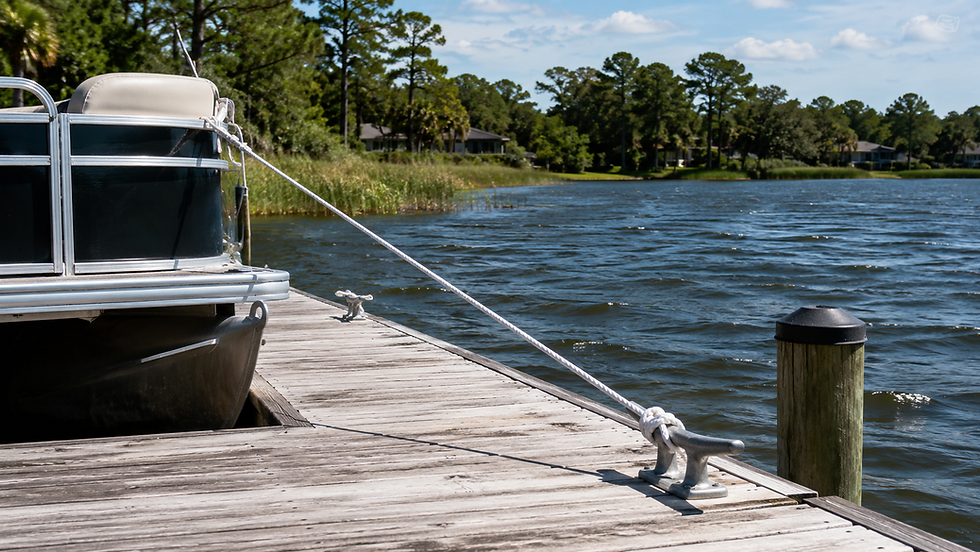
When Wind-Driven Chop Twists a Floating Dock on a Florida Lake

Have you noticed your floating dock doing the twist? Let's keep the dancing on the dance floor! Your floating dock needs to keep it's self steady. Here is what to look for...
One finger of your floating dock rises while the adjoining section rolls the other way. The joint between them keeps working as wind pushes chop across your Florida lake. Some movement belongs in a floating system, but a new twist, a joint that binds, or a section that stays crooked deserves an inspection. Check how the sections connect and how the dock is restrained before buying stronger hardware.
If the movement makes footing uncertain, stop using that section. Keep people away from damaged connections, and do not reach between moving dock sections. A cracked bracket or separated joint needs a qualified dock installer to assess it before normal use resumes. A calm afternoon afterward does not prove the problem has gone away.
Find where the sections move differently
Wind can send waves toward a dock at an angle. A finger extending into the lake may meet a crest before the adjoining walkway does. That difference can make the connection carry twisting loads rather than simply follow both sections upward together. The actual response depends on the dock configuration and restraint, so appearance alone cannot identify the failed part.
NOAA explains that wind strength, wind duration, and fetch determine how large wind-driven waves get. On your Florida lake, note which wind direction has an open stretch of water leading toward the dock, rather than judging exposure only by how breezy the yard feels.
Watch from stable ground conditions permit. Record whether the whole platform rolls together or one finger repeatedly moves against the main walkway. Include the shoreline in a short video so an installer can see the direction of the waves and the dock layout. Do not step onto the moving section to get a closer shot.
Distinguish sustained chop from the waves left by a passing boat. If the hull beside the dock is striking its edge, boat traffic and bumper contact need their own assessment. Padding the boat's contact point does not correct twisting between floating sections.
Inspect the connection and its restraint together
After the wind settles, photograph any visible damage without lifting sections or releasing anchors. Compare both sides of the affected joint. Note fresh rubbing, displaced connection parts, or a gap that remains when the water is calm. These are useful observations, not proof of one particular cause.
The installer should check the section connections alongside the anchoring arrangement. A connection intended to allow movement may bind if something obstructs it. A damaged restraint may allow unwanted sideways travel. Both possibilities require checking against the system's actual design, not guessing from a photograph.
Manufacturers provide model-specific installation instructions for dock components. For a Florida lake installation, the technician should identify the existing system and use its applicable instructions before recommending a different connector or anchoring component. Instructions for another model cannot establish what your dock needs.
Have the original layout drawing ready, if one exists. Record any section added since installation and any heavy accessory mounted near the twisting joint. Those changes deserve review, but they do not automatically explain the motion. The installer needs to assess the current arrangement, including parts that cannot be seen above water.
Draw the affected finger on a simple plan and mark the joint you filmed. Give it a clear label you can use in photographs and repair notes. Include section dimensions from existing paperwork, or measure only where access is stable. This helps prevent a replacement being ordered for the wrong location or connection type.
An isolated fitting that moves on otherwise sound material differs from adjoining sections twisting under waves. Loose hardware checks can help document that separate defect without treating a wrench as the answer to the entire dock's movement.
Match the repair to the dock you have
Before ordering from the floating dock and accessory range, confirm the component identity and what motion the replacement must accommodate. A larger fastener may fit a hole yet leave the connection working incorrectly. Avoid improvised braces between sections until the installer explains how they affect intended movement.
A dock repair assessment should distinguish damaged parts from a layout or anchoring problem. Ask which observation supports the proposed repair and whether the same wave exposure will remain afterward. That helps you compare repairing the existing joint with correcting the arrangement that loads it.
Florida DEP offers dock exemption verification and permitting routes. Before changing anchors or the dock footprint on your Florida lake, confirm which route applies with the responsible agency and local permitting office.
The South Florida Water Management District provides environmental resource permitting information. If your Florida lake lies within its jurisdiction, confirm which agency handles your project; elsewhere, identify the responsible office before purchasing installation materials.
Keep the earlier video with the repair record. Before returning the affected section to use, have the installer confirm the repair and record how that same joint responds to comparable chop.
So, next time you notice your floating dock doing a jig, get in touch with your installer to have them review and repair it if necessary.