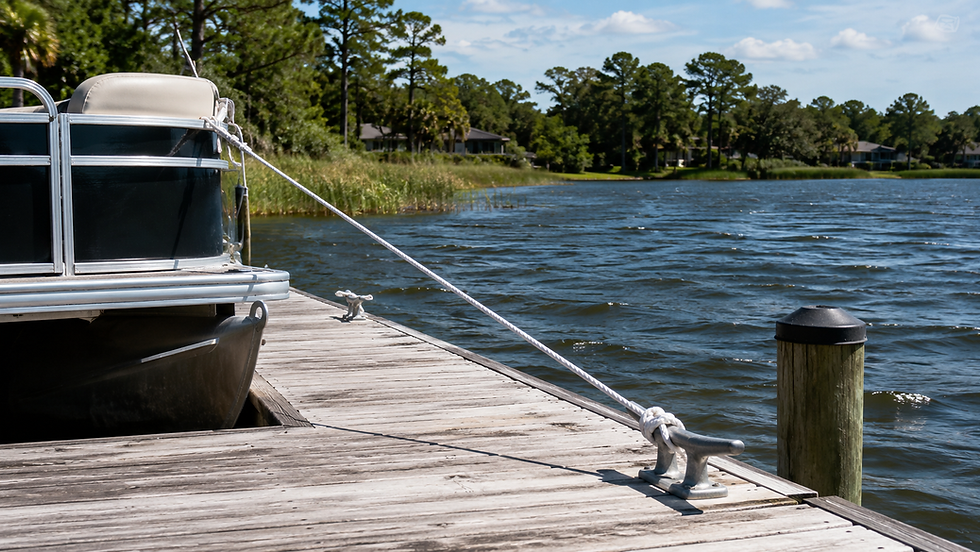
How loose dock hardware can turn into bigger repair bills on Florida lakes

A cleat that moves a quarter inch may not look urgent. On a Florida lake dock, that small gap grows fast. Afternoon wind, passing boat wake, changing water levels, wet boards, and repeated rope tension all pull on the same weak spot. By the time the owner notices a bent bracket or lifted board, the repair may no longer be a simple hardware swap.
Small movement is the first warning
Loose hardware rarely fails at once. It starts with movement. A bolt backs out. A washer sinks into old wood. A dock bumper shifts below the boat rub rail. A ladder bracket rocks each time someone climbs out of the lake.
Here is a quick suggestion before you make any drastic moves... check hardware with your hand before you grab a wrench. If a cleat wiggles, a bolt spins without tightening, or the board flexes under the fitting, the problem may sit under the surface. Tightening the top nut may hide rotten wood, stripped holes, or a backing plate that no longer spreads the load.
What Florida lake use does to hardware
Florida lake docks deal with heat, moisture, algae, rain, and use during long boating seasons. Even freshwater docks can punish metal, wood, and fasteners. The University of Florida notes that humidity and poor metal pairings can speed corrosion, so mixed hardware is worth checking.
Check the dock before buying parts
Start with the area around the loose piece. Look for dark wood, soft spots, rust trails, cracked decking, oval bolt holes, and boards that move under foot pressure. Check below the dock if you can do it safely. If the underside shows splitting or bent brackets, call a dock repair professional before adding hardware.
Measure the load before replacing hardware
A cleat for a small boat may not be the right one for a heavier pontoon. A ladder used all summer needs better support than a decorative ladder. Bumpers should line up with the boat, not just the dock edge. Ropes should pull at a clean angle, not sideways against weak boards.
The Florida Fish and Wildlife Conservation Commission has boating equipment guidance and boating regulations for safe boarding, vessel access, and on-water use.
Where small repairs save money
The cheapest repair is often done early. Replacing fasteners, adding a backing plate, or moving a bumper before the boat rubs through a corner, costs less than repairing broken decking, damaged gelcoat, or a bent lift part.
After more than 20 years around Florida docks and boat accessories, Boat Dock Stuff has seen repair bills start with one ignored fastener. The smart move is to fix the cause, not just the loose piece. Our dock and lift service team can inspect hardware, dock connections, bumpers, ladders, lift parts, and accessories before damage spreads.
Accessories that deserve a closer look
Check cleats, dock bumpers, ladders, hinges, brackets, ropes, dock boxes, lift hardware, and PWC port connections. These parts carry weight and absorb impact. If one part moves, nearby boards and fasteners may already be taking extra stress.
Boat Dock Stuff has a related article about Florida water level changes and dock challenges. Shifting water can strain fixed docks, mooring points, and access areas.
Match the fix to the real problem
Don't just replace old hardware with new ones because it fits the old holes. If the wood is soft, repair the structure first. If the boat sits higher than the bumper, change the bumper height. If ropes pull at a bad angle, add a better cleat location.
A simple hardware check before ordering
Walk the dock after rain, then again after a busy boating day. Mark any fitting that moves, squeaks, stains the deck, or catches a rope. Take photos. Measure board thickness, bolt length, bumper height, and boat contact points. This prevents guessing and helps avoid buying parts twice.
Florida checks before dock changes
Hardware replacement may be routine, but structural changes can be different. Before expanding a dock, changing access, adding electrical components, modifying a lift, or altering anchoring, check the proper local office. Florida dock rules can vary by county, city, HOA, water management district, marina, lake authority, river authority, and waterbody.
Useful starting points include Florida DEP dock permitting guidance, the Florida Water Permitting Portal, and St. Johns River Water Management District permitting resources. Use official sources and local contacts before spending money on work that may need approval.
Get the loose hardware checked before it spreads
Loose hardware is small inconvenience until it starts damaging the dock around it. An inspection can protect the boat, reduce dock wear, and keep a simple repair from turning into a board, bracket, or lift problem. For help from a Florida dock team with more than two decades of field experience, contact us before the next loose part becomes expensive.