


How Florida lake wind changes where you place ropes and cleats
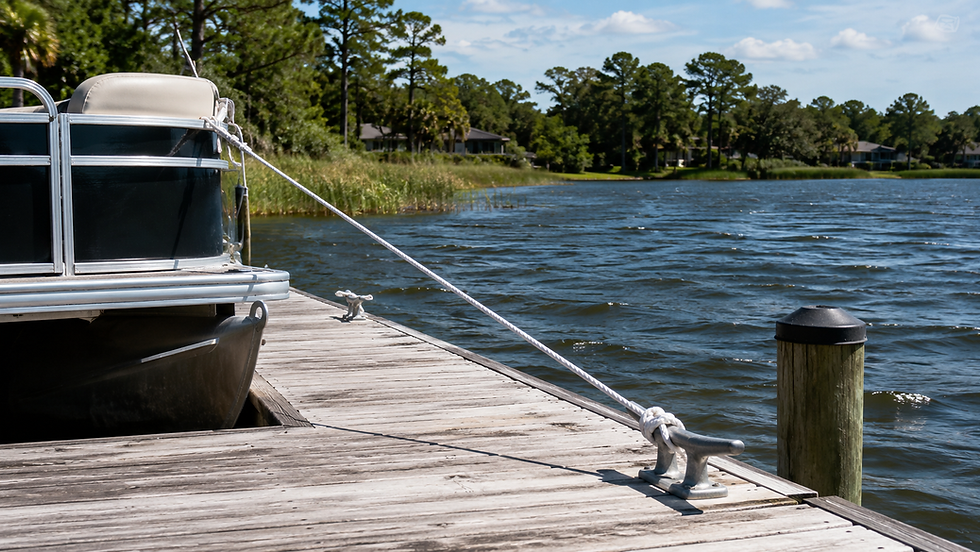
A boat can look secure on a calm morning, then start rubbing agaist the dock by late afternoon. If ropes pull from the wrong angle, the dock hardware takes the strain instead of the line.
Wind direction should guide the first cleat decision
When placing your dock setup, start by watching how wind usually hits your dock. Open lakefront lots often take wind from one side. Canals and narrow coves may funnel gusts through one lane. A cleat placed for easy tying may not protect the boat.
Ropes should control movement without forcing the hull against one dock edge. Bow and stern lines hold the boat near the dock, but spring lines help stop forward and backward movement. The BoatUS Foundation guide to mooring and docking lines explains how dock lines work together, and Sea Tow breaks down bow, stern, and spring lines.
Watch the boat before you move hardware
Tie the boat the way you normally do. Step back. Look at where the hull touches the bumpers, how the lines angle, and whether one cleat takes most of the load. If the boat surges forward, aft, or sideways, you may need a better spring line position instead of another bumper.
Bad rope angles can make good cleats fail
A strong cleat can still fail if the pull is wrong. Side pull can loosen fasteners, twist boards, and wear rope at the contact point. Short ropes can make the boat jerk against the dock. Long ropes can let the boat drift far enough to strike a piling, lift frame, or neighboring vessel.
Check line length before buying more hardware
Use enough line for stretch and movement, but not so much that the boat wanders. Broward County’s Safe Boating Guide notes that three strand nylon works well for dock lines because it can stretch and absorb wind and wave shock.
Place cleats where they solve movement
Do not copy the old cleat location without checking the boat. The right position depends on boat length, dock height, bumper placement, lift location, water level, and the direction wind pushes the hull.
A good cleat location lets the rope pull cleanly, keeps the line away from sharp edges, and supports a simple tie pattern that family members can repeat.
Use bumpers and ropes as one system
Bumpers protect contact points. Ropes control motion. Cleats anchor the plan. If one part is wrong, the others work harder. A bumper mounted too low will not help a pontoon rail. A cleat set too far forward may not stop stern movement. A rope tied across a walking path can create a trip risk.
Boat Dock Stuff helps Florida dock owners match cleats, ropes, bumpers, ladders, lift parts, and dock accessories to real lake use. Our dock and lift service page can help if the dock needs inspection before new hardware goes in.
A small change can prevent repeat spending
Many boart owners buy heavier cleats first, then replace worn rope, then add more bumpers. That order can waste money. The better first step is to find the movement pattern. A properly placed spring line angle or shifted cleat may solve what extra accessories cannot.
After more than 20 years around Florida docks and boat accessories, Boat Dock Stuff has seen simple layout choices prevent repairs. If wind keeps pushing your boat into the same spot, contact our local team before too much damage occurs.
Florida checks before changing the dock
Replacing a rope or tying to an existing cleat is usually different from changing structure, adding electrical parts, modifying a lift, or altering the dock layout. Florida rules can vary by county, city, HOA, water management district, lake authority, and waterbody. Check official sources before buying parts for structural work.
Review the Florida Fish and Wildlife Conservation Commission boating equipment page, the Florida boating regulations page, the Florida Water Permitting Portal, and Florida DEP dock permitting guidance.
Use wind as the layout test
The best rope and cleat setup is not the one that looks tidy. It is the one that controls the boat when wind crosses the lake. Walk the dock after a breezy afternoon. Look for rubbing, loose fasteners, rope wear, tilted bumpers, and boards that flex near cleats.
If the same problem keeps returning, visit the Boat Dock Stuff blog. Our related article on changing water levels on Florida lakes and rivers may provide a little more insight.
